
Rosh Hashanah: Flowers, Apples, and Honey
Rosh Hashanah is commonly translated as the Jewish New Year though it is only one of several New Year beginnings according to the Bible. Unlike most other events in the Jewish calendar, this festival (and Yom Kippur after it) are not based on a historical event but refers to the creation of the world by God. It is celebrated in the month of Tishri (September/October) though Ezekiel placed it firmly into spring and the month of Nissan.
Rosh Hashanah Flowers and Gifts

Pure Bliss

Massive Reductions




Jewish New Year Traditions: Apples and Honey
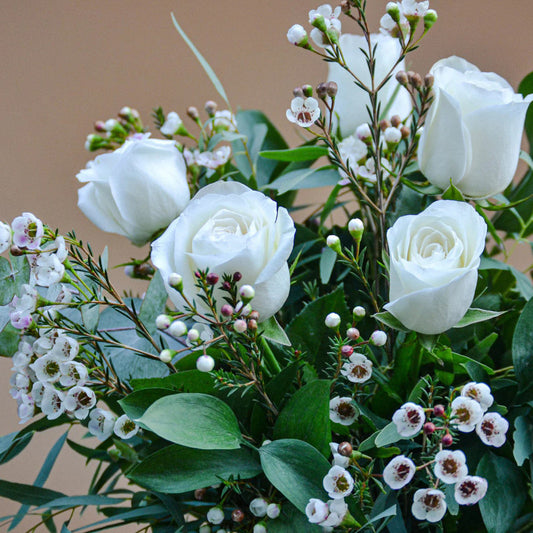
There are many traditions surrounding the Jewish New Year, but one that has caught on since medieval times is eating apples dipped in honey. Giving presents is also part of the tradition, and sending your good wishes in form of white flowers and white blooming plants has become as much part of the festivities as many older traditions. It has become the custom to send out these Rosh Hashanah flower gifts on the eve of the festival. In 2026, Rosh Hashanah begins at sundown on Friday 11 September and continues until nightfall on Sunday 13 September. Plan your flower delivery in advance so your gifts and good wishes arrive in time for the celebrations.

Rosh Hashanah Flowers
Sending White Flowers as a Gift for Shana Tova
White flowers on this festival are in keeping with the predominantly white colour scheme in the synagogue where the curtain of the Ark is held in white and the Torah lectern is covered with a white cloth. In these times of global connection, Diaspora is no longer a hindrance to sending flowers to your loved ones. And metropolitan areas like London allow for Sunday flower deliveries and even 24 hours services.
White flowers and white flowering plants are a representation of the Earth. A gift of a white orchid plant or a bouquet of white flowers is therefore a fitting gift on Rosh Hashanah. With Rosh Hashanah taking place from Friday 11 to Sunday 13 September 2026, you can arrange your flowers in advance so your wishes of Shana Tova reach friends and family at the right time. For an extra traditional touch, apples and honey can also make a thoughtful addition to your Rosh Hashanah gift. If you do your order before Saturday, we offer you the possibility to order some apples and honey to go with the same-day flower delivery anywhere in central London.
While the Talmud mentions the traditional foods of dates, black-eyed peas, leek, spinach, and gourd, pomegranate like apple and honey stems from a later tradition. Any of these might serve as a gift on Erev Rosh Hashanah, but when ordering online, a flower delivery with a nice message seems to be safer and more appropriate. And I am not even mentioning gefilte fish.

Flowers in Jewish traditions
Flowers are a presence and tradition on all Jewish holidays. They are used for table decorations during meals and for the house as well as in the synagogue. Flowers are displayed over the whole holiday; roses and apple blossoms are mentioned in the Torah, but a flower gift mustn’t necessarily comply with that. As apple blossoms are decidedly out of season (an indication that Ezekiel might have been on to something), stems with small apples are a possible addition to any bouquet.
When sending flowers to Orthodox or observant recipients, we recommend arranging delivery before Rosh Hashanah begins at sundown on Friday 11 September. During Shabbat and Rosh Hashanah, observant recipients may be unable to sign for deliveries or carry out tasks such as cutting ribbons or trimming flower stems, so delivering beforehand helps ensure the flowers can be received and prepared in time.
We wish you all a Shana Tova Umetukah!